


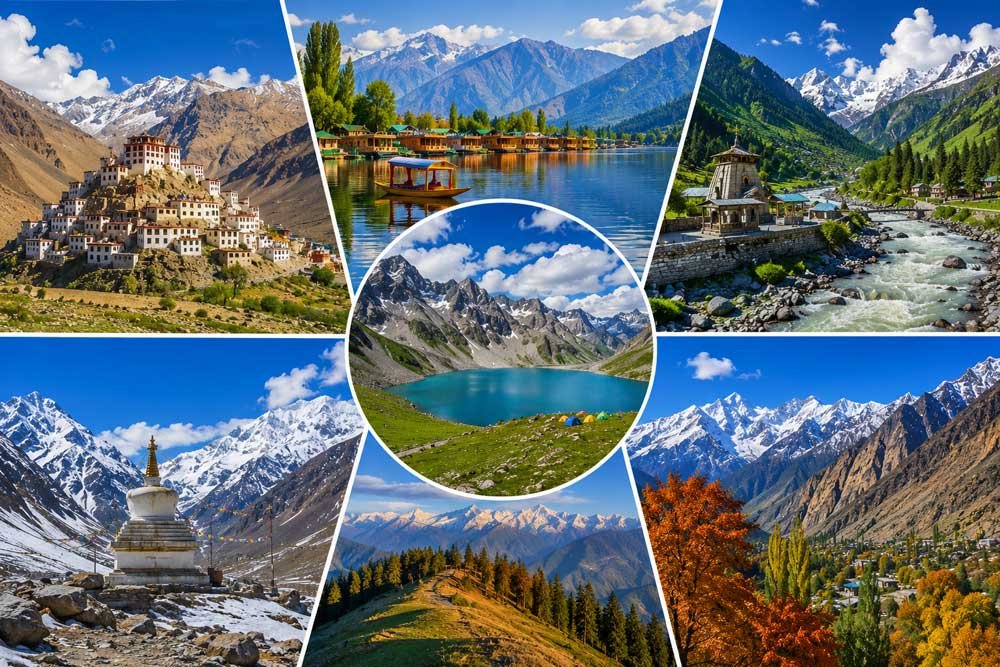
The Himalayas look different with every season, but September and October offer something particularly special. The monsoon begins to retreat, mountain landscapes become clearer, the air turns cooler, and many popular Himalayan destinations become more comfortable for road trips, sightseeing and trekking.
You May Also Like

For travellers planning a Himalayan holiday in 2026, this short post-monsoon window can be one of the best times to explore the mountains. However, conditions vary considerably from one region to another. While Himachal Pradesh and Uttarakhand become increasingly attractive after the rains, rain-shadow destinations such as Spiti Valley can offer a very different experience. Kashmir also becomes appealing as summer crowds begin to ease and autumn gradually approaches.
So, where should you go?
Here is a practical guide to some of the best Himalayan destinations in September and October 2026, including what to expect, who each destination suits and how to plan your trip.
Why September and October Are Great Months for Himalayan Travel
September and October sit between the main monsoon and winter seasons in much of the Indian Himalayas. This transition creates a useful travel window for people who want mountain scenery without the conditions associated with peak monsoon or deep winter.
Himachal Pradesh Tourism describes September to November as its autumn season, highlighting trekking, sightseeing and other outdoor activities during this period. It also identifies Lahaul-Spiti as a destination with relatively little monsoon influence and a longer trekking season.
The biggest advantages include clearer mountain views, cooler temperatures and changing landscapes. September can still bring occasional rain in some Himalayan areas, so travellers should not assume that the entire region becomes dry on September 1. October generally brings more distinctly autumn-like conditions.
Another advantage is the variety of experiences available. You can choose a high-altitude road trip, a Himalayan trek, a peaceful valley escape or a cultural journey.
1. Spiti Valley – The Best Choice for a Himalayan Road Trip
If your idea of a Himalayan holiday involves dramatic landscapes, remote villages, Buddhist monasteries and long scenic drives, Spiti Valley deserves to be near the top of your list.
September is particularly attractive because the monsoon has largely withdrawn from the surrounding regions while Spiti itself lies in a rain-shadow landscape. The result can be dry roads, clearer skies and excellent visibility.
Kaza, Key Monastery, Dhankar, Tabo, Langza, Hikkim and Komic are among the places travellers can consider adding to their itinerary.
September also brings a different character to the valley. Agricultural landscapes begin to take on golden autumn colours, while the colder nights remind visitors that winter is approaching.
For photographers, this period can be especially rewarding.
If you are planning a longer road trip, consider reading our Spiti Valley Road Trip 2026 guide for a more detailed itinerary and route-planning information.
2. Kashmir – For Autumn Landscapes and Relaxed Travel
Kashmir is another excellent option for September travel.
The valley begins moving from summer towards autumn, creating pleasant conditions for sightseeing and photography. Srinagar, Gulmarg, Pahalgam and Sonamarg can be combined into a flexible itinerary depending on how much time you have.
September can also appeal to travellers who want to avoid the busiest summer period. Current travel guides describe September as a strong shoulder-season month for Kashmir, with generally pleasant days, cooler evenings and gradually developing autumn colours.
A Kashmir trip does not have to be focused entirely on sightseeing. Travellers can combine lakeside experiences, mountain scenery, local food, village visits and short walks.
October becomes even more interesting for people looking for autumn colours.
3. Himachal Pradesh – A Classic Post-Monsoon Escape
Himachal Pradesh remains one of India’s most accessible Himalayan regions and offers a huge variety of destinations.
Manali, Dharamshala, Kullu, Kinnaur and Lahaul-Spiti can all provide very different experiences.
The official Himachal Tourism website specifically highlights autumn as a season for trekking, climbing, sightseeing and adventure activities. It lists September to October among the useful months for exploring Lahaul-Spiti as well.
For a shorter holiday, travellers can consider Manali and nearby valleys. Those with more time can explore Kinnaur or continue towards Lahaul-Spiti.
The key advantage of Himachal is flexibility. You can plan a weekend-style mountain break or a two-week road trip without changing states.
4. Uttarakhand – Best for Trekkers and Mountain Lovers
Uttarakhand is another strong choice for September and October.
The state has an extensive trekking network, ranging from relatively accessible trails to demanding high-altitude routes. Official Uttarakhand Tourism information highlights destinations including Valley of Flowers, Panch Kedar, Pindari Glacier and several other trekking regions.
The Valley of Flowers is particularly interesting because the monsoon season brings its famous alpine landscape to life. Uttarakhand Tourism describes it as one of the state’s popular trekking destinations and notes the vibrancy of its flowers during the rainy season.
Travellers looking for a shorter adventure can also consider Nag Tibba. The official tourism site describes the Nag Tibba trek as a two-day easy-to-moderate experience suitable for families and groups.
This makes Uttarakhand suitable for both experienced trekkers and people who simply want to add a short Himalayan hike to their holiday.
5. Lahaul and Spiti – For Travellers Who Want Fewer Crowds
Although Spiti has already been mentioned, the broader Lahaul-Spiti region deserves separate attention.
The landscape changes dramatically as you move away from the greener parts of Himachal. Rocky mountains, high passes, monasteries and sparse villages create a landscape that feels completely different from traditional hill stations.
Himachal Tourism notes that Lahaul-Spiti receives relatively little monsoon influence and describes June to October as its visiting season.
September can therefore be an excellent compromise for travellers who want dramatic mountain scenery without visiting during the busiest summer period.
However, this is high-altitude travel. Temperature changes can be significant, and road conditions can change quickly. Build flexibility into your itinerary rather than planning every hour of the trip.
6. Kashmir Great Lakes and Other Himalayan Treks
For adventure travellers, September and October can be excellent months for trekking.
Current travel interest is particularly visible around autumn Himalayan treks, with September and October searches focusing on routes across Uttarakhand, Himachal Pradesh and Kashmir. Recent discussions from travellers planning their first Himalayan trek for September or October also show interest in beginner-friendly routes and quieter trails.
The important thing is to match the trek to your fitness, experience and altitude tolerance.
Beginners should not choose a trek simply because photographs look spectacular. Distance, elevation gain, weather, accommodation and emergency access all matter.
For first-time trekkers, a shorter moderate route with an experienced local operator can be a much better experience than attempting an extremely demanding high-altitude trail.
7. Puniya Top – An Offbeat Uttarakhand Option
Travellers searching for something beyond the usual Mussoorie, Nainital and Manali circuit can consider lesser-known Himalayan destinations.
Puniya Top in Uttarakhand is one example. Uttarakhand Tourism describes it as a relatively untouched trekking destination known for forests, mountain views, alpine flora and encounters with remote Himalayan villages. The trek reaches approximately 4,000 metres.
Destinations like this can be particularly appealing to travellers who want quieter landscapes and a stronger connection with local mountain communities.
However, lesser-known does not automatically mean easier. High-altitude routes still require proper preparation and should be approached responsibly.
September vs October: Which Month Is Better?
The answer depends on what you want from your Himalayan trip.
September is a good choice if you want greener landscapes, post-monsoon freshness and access to destinations that become difficult later in the year.
October is often better for travellers who prioritise crisp weather, clearer mountain views and autumn scenery.
For road trips, both months can work well, but conditions are never guaranteed in the mountains. A late monsoon spell, landslide or early snowfall can affect travel plans.
That is why checking the latest weather and road conditions before departure is essential.
Important Safety Tips for Himalayan Travel in 2026
The Himalayas are beautiful, but they demand respect.
Current August 2026 weather reports show continuing heavy rainfall and potential travel disruptions across parts of the Himalayan region, including Uttarakhand, Himachal Pradesh and Jammu & Kashmir.
If travelling during the transition from monsoon to autumn:
- Check the weather forecast before leaving.
- Check road and highway conditions on the day of travel.
- Avoid driving unfamiliar mountain roads late at night.
- Keep at least one buffer day in longer itineraries.
- Carry warm layers even if daytime temperatures feel comfortable.
- Stay hydrated at high altitude.
- Give your body time to acclimatise.
- Do not ignore headaches, dizziness, nausea or unusual breathlessness at altitude.
- Use experienced local guides for demanding treks.
- Keep offline maps and important emergency contacts available.
Mountain conditions can change faster than expected, so flexibility should be part of your travel plan.
What Should You Pack for a September–October Himalayan Trip?
Your packing list should depend on altitude, but a few basics are useful almost everywhere.
Carry layered clothing rather than relying on one heavy jacket. A waterproof outer layer is still useful in September, while thermal layers become increasingly important as October progresses.
Comfortable trekking shoes, sunglasses, sunscreen, a reusable water bottle, personal medicines, power banks and a small first-aid kit are also worth carrying.
For high-altitude destinations such as Spiti, additional preparation is necessary. Do not treat a high-altitude road trip like an ordinary hill-station holiday.
Final Thoughts
September and October can be among the most rewarding months to explore the Himalayas. From the stark beauty of Spiti Valley to the autumn atmosphere of Kashmir, the trekking routes of Uttarakhand and the diverse landscapes of Himachal Pradesh, there is something for almost every type of traveller.
The best destination ultimately depends on your travel style.
Choose Spiti for a dramatic road trip, Kashmir for scenery and relaxation, Himachal Pradesh for variety, and Uttarakhand for trekking and spiritual experiences.
Most importantly, do not plan a Himalayan trip based only on photographs. Check current weather, road conditions and local advisories before travelling.
The mountains will always be there. The smartest travellers are the ones who reach them prepared.