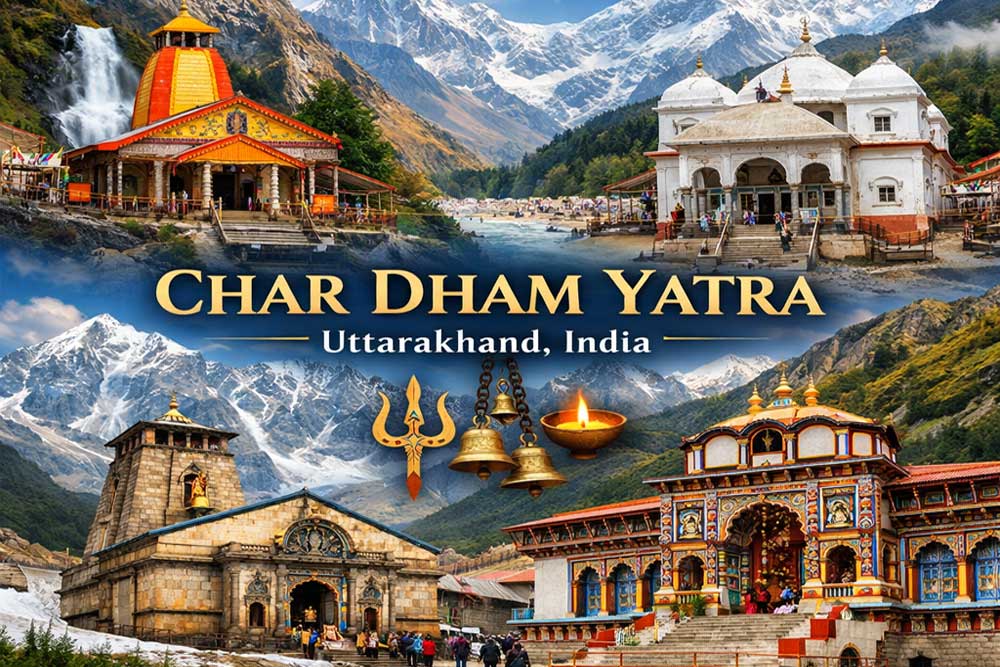
The Char Dham Yatra is one of Hinduism’s most respected pilgrimages, attracting thousands of devotees from India and abroad every year. Located in Uttarakhand’s Garhwal Himalayas, the route covers four holy shrines: Yamunotri, Gangotri, Kedarnath, and Badrinath. For many, visiting these sites is about more than travel—it’s a path to spiritual freedom, personal growth, and a deeper connection with faith and nature.
In 2026, the Char Dham Yatra offers a unique experience that combines age-old traditions with easier access. This guide covers important dates, the spiritual meaning of the journey, itinerary ideas, planning tips, and practical advice to help you prepare for this special trip in the Himalayas.
What Is the Char Dham Yatra?
The Char Dham Yatra in Uttarakhand is a pilgrimage circuit that holds immense significance in Hindu culture. Each destination is dedicated to a major deity and has its own unique legend and spiritual importance:
- Yamunotri is dedicated to Goddess Yamuna, the river of purity.
- Gangotri honors Ganga, the sacred river believed to wash away sins.
- Kedarnath is devoted to Lord Shiva in his most powerful form.
- Badrinath is the abode of Lord Vishnu, the preserver of the universe.
Traditionally, pilgrims make this journey to seek blessings, purify themselves, and gain spiritual merit. Many believe that completing the Char Dham Yatra brings moksha, or freedom from the cycle of life and death.
Beyond religious devotion, the yatra offers a magnificent encounter with the Himalayas: snow-capped peaks, sacred rivers, lush forests, picturesque valleys, and remote villages. Each part of the journey has its own charm and challenge.
Char Dham Yatra 2026 — Opening & Closing Dates
The Char Dham temples are open only in the warmer months. Heavy winter snowfall closes the shrines from late autumn until early spring. The exact opening and closing dates depend on the Hindu calendar, weather, and official updates from temple committees.
2026 Opening Dates (Confirmed/Tentative)
For 2026, the schedule for the kāpat (gate) opening is as follows:
- Yamunotri Temple: 19 April 2026 (on Akshaya Tritiya)
- Gangotri Temple: 19 April 2026
- Kedarnath Temple: 22 April 2026
- Badrinath Temple: 24 April 2026
These dates are traditionally announced around Akshaya Tritiya, one of the most auspicious days in the Hindu calendar, believed to bring abundant blessings and good fortune to travelers.
2026 Closing Dates (Tentative)
Closing dates may vary slightly with weather and administrative decisions, but the general pattern is as follows:
- Yamunotri & Gangotri: Late October – Early November 2026
- Kedarnath & Badrinath: Early to Mid-November 2026
Usually, Badrinath closes after Diwali, and the other dhams stay open for a few more days. Since these dates can change each year, it’s best to download the Tourist Care Uttarakhand app or check the official Uttarakhand tourism website before you travel.
Why April–November? The Seasonal Window
The Char Dham Yatra season matches India’s spring, summer, and autumn. Winters in the high Himalayas bring heavy snow, freezing temperatures, and unsafe travel, so the routes are closed during that time. Here’s what to expect each season:
- April – June: The season begins as snowfall recedes.
- July – August: Monsoon rains may cause landslides, temporary route closures, and travel delays.
- September to October is often called the “Golden Season” because of clear skies, comfortable weather, and smaller crowds.s.
- November: Closing month before winter sets in.
Typical Char Dham Yatra Itinerary (10–12 Days)
Most pilgrims finish the Char Dham Yatra in 10 to 12 days by road. A good plan includes rest days, easy treks, and time for sightseeing.
Day 1: Haridwar / Rishikesh Arrival
Start your journey in Haridwar or Rishikesh, which are the usual starting points for the Char Dham route. Try to join the evening Ganga Aarti before you head into the mountains.
Day 2–3: Yamunotri
Travel to Yamunotri via Barkot, a common base camp. The temple is close to Janki Chatti, and you’ll need to trek about 6 km to reach it. Ponies and palkis are available if you need help with the walk. Many devotees cook rice and potatoes in the hot springs at Surya Kund, which is a special ritual.
Day 4–5: Gangotri
Next, proceed to Gangotri, set against the backdrop of the Gangotri Glacier, the origin of the sacred Ganga. Main attractions include the temple complex itself and the nearby riverside views.
Day 6–8: Kedarnath
Reaching Kedarnath is one of the toughest parts of the yatra. From Gaurikund, you need to trek about 16 km to the temple. If you want a faster or easier option, helicopter services are also available.
Day 9–10: Badrinath
The last dham is Badrinath, where Lord Vishnu is worshipped. The temple sits in peaceful, high-altitude scenery by the Alaknanda River and offers a sense of calm and spiritual completion. You can also visit nearby attractions such as Mana Village and the Tapt Kund hot springs for a richer experience.
Day 11–12: Return
Head back to Haridwar or Rishikesh, or add some extra days for sightseeing or adventure in the Garhwal region.
Registration & Safety Protocols
For 2026, all pilgrims must register before starting the Char Dham Yatra. You can register online, usually through the Tourist Care Uttarakhand app or the official website, and you’ll get a QR-coded pass to show at checkpoints. Be sure to carry a valid photo ID and a copy of your registration, either printed or on your phone.
Safety rules are in place all season, with medical posts, police checkpoints, and weather updates along the way. Authorities also provide ambulance services and emergency assistance along the route.
If you want to save time and avoid long treks, you can do the Char Dham Yatra by helicopter. These packages usually cover all four shrines in 2 to 5 days, with VIP darshan and great aerial views. Since helicopter travel depends on the weather, it’s important to book early and stay flexible. The season runs from April to November, and most people choose to travel during:
- May – June: Clear weather and easier trekking conditions
- September – October: Post-monsoon clarity, pleasant temperatures, and fewer crowds
Avoid traveling during the monsoon months, July and August, due to increased risks of landslides and travel disruptions.
Practical Tips for Pilgrims
Here are some valuable pointers for a smoother and spiritually fulfilling journey:
1. Book Early
Hotels and registrations fill up quickly during busy months. Planning your stay and transport early will help you avoid last-minute problems.
2. Pack Smart
Mountain weather changes quickly, so pack layered clothes, waterproof items, trekking shoes, a first-aid kit, and any medicines you need.
3. Respect Local Customs
Uttarakhand authorities do not allow phones or cameras inside Char Dham temple complexes. This helps keep the temples sacred and lets everyone focus on their visit.
4. Take Buffer Days
Weather can delay travel in the mountains, so add extra days to your schedule to avoid stress.
5. Health and Fitness
Some parts of the route can be reached by vehicle, but places like Kedarnath and Yamunotri need long walks. Get ready physically and consider using a mule or palanquin if you need help.
The Char Dham Yatra 2026 is more than just a physical trip. It’s a journey of devotion, self-reflection, and connecting with the beauty of nature. Whether you walk the traditional paths, take a helicopter, or plan a special family trip, this ancient pilgrimage lets you go beyond the everyday and experience the sacred spirit of the Himalayas.
With its deep spiritual history, stunning scenery, and well-planned dates from April to November 2026, the Char Dham Yatra continues to inspire millions. It invites every pilgrim to move closer to inner peace and receive divine blessings.